
Start a Franklin People Search
Choose the first record by the fact already known. A current or old address points to the Williamson County assessment roll and parcel map. A full name with an event date may fit a court, deed, marriage, obituary, or archive index. A phone number is less useful in government systems, but a historical telephone or city directory may tie it to an address. Each source records a role at a point in time. None is a master list of Franklin residents.
Keep the first pass broad, then test the result against a second source. An assessed owner may not occupy the land. A deed party may be a trustee or lender. A case name may identify either side of a dispute. Middle names, former names, initials, dates, parcel numbers, and record roles help separate two people with the same name.
- Search the property roll when an address or owner name is known.
- Check the Register of Deeds under both grantor and grantee roles.
- Choose the right city, county, state, or federal court before looking for a party.
- Use the Archives and library for older names, deaths, homes, and school ties.
- Ask the correct custodian for a copy when an index stops at a reference.
An index points to a record. A grantor transfers an interest, while a grantee receives one. A docket logs steps in a court case. A situs address is the physical property address, which may differ from the owner's mailing address.
Franklin Records Offices by Role
Franklin is both a city and the Williamson County seat, so many strong identity records sit with county offices. The Register records deeds and related instruments. The County Clerk handles marriage licenses and other clerk functions. The City Recorder routes municipal material such as minutes, permits, and city administration records. Current court files stay with the proper clerk, while the Archives links many older court, deed, tax, marriage, and probate references. Detailed access law and request steps belong in the Franklin public records system.
Williamson County Register of Deeds
1320 West Main Street, Suite 201
Franklin, TN 37064
615-790-5706
Franklin City Recorder
740 Columbia Avenue
Franklin, TN 37064
615-550-6609
Franklin Property Search Trail
The Tennessee Property Assessment Data portal is a documented alternate when the Williamson County property site does not load. Set County to Williamson, then search by owner, address, or parcel. Advanced controls add subdivision, classification, sale dates, and parcel components. Record both the situs and mailing addresses. Their difference may suggest an owner receives tax mail elsewhere, but it does not prove where that person lives.
| Franklin property field | Best use | Search note |
|---|---|---|
| Owner Name | Find a titled owner | Try full name, surname, and initials |
| Property Address | Locate the physical site | Street number is optional |
| Subdivision Name | Narrow a shared street name | Use the recorded subdivision |
| Sale Date Start / End | Limit a transfer period | Use when names repeat |
| Parcel Control Map | Carry the match into GIS | Begins with three digits |
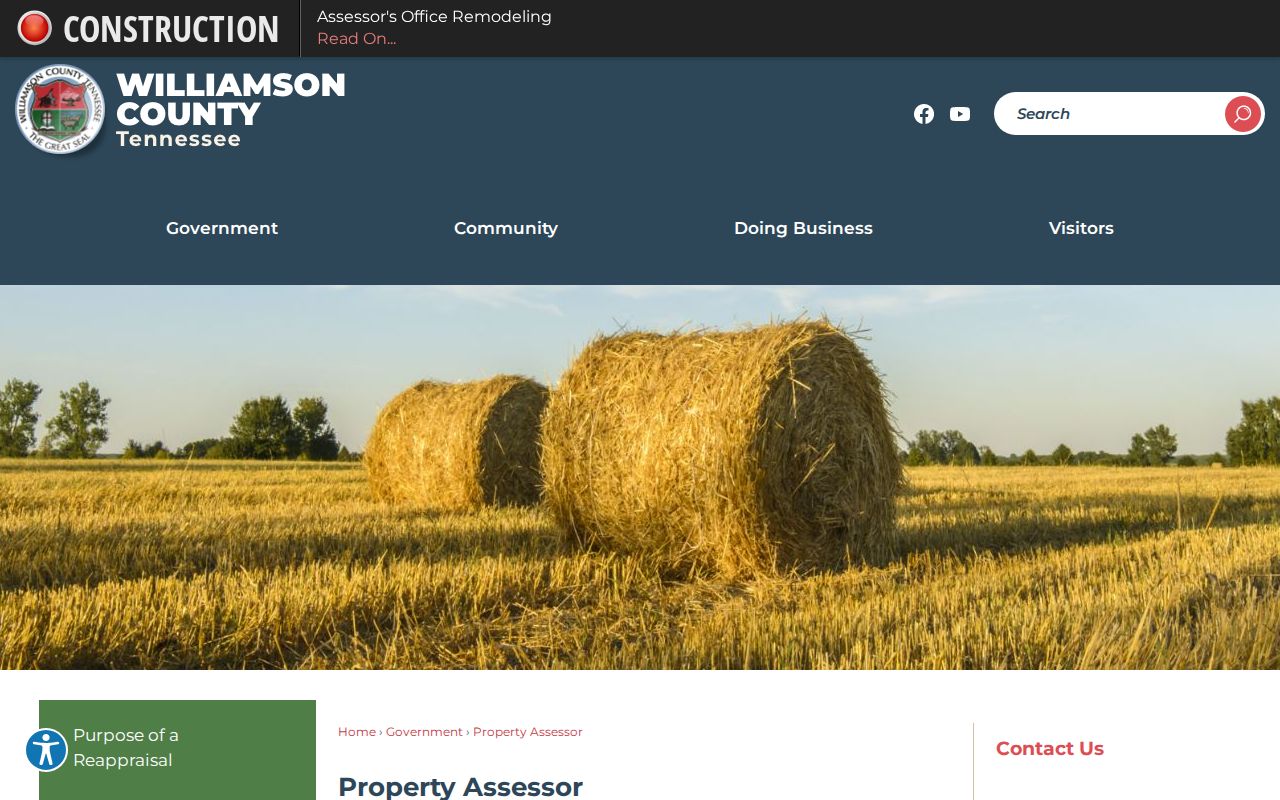
The Williamson County Property Assessor page links the local property search and advanced mapping. The screenshot shows the official entry point used for Franklin owner and parcel research.
Move from the parcel to a deed before treating assessment data as proof of title or occupancy.
Note: A tax-mailing address is an official lead, not a finding that the owner resides at that address.
Deed Names Behind Franklin Addresses
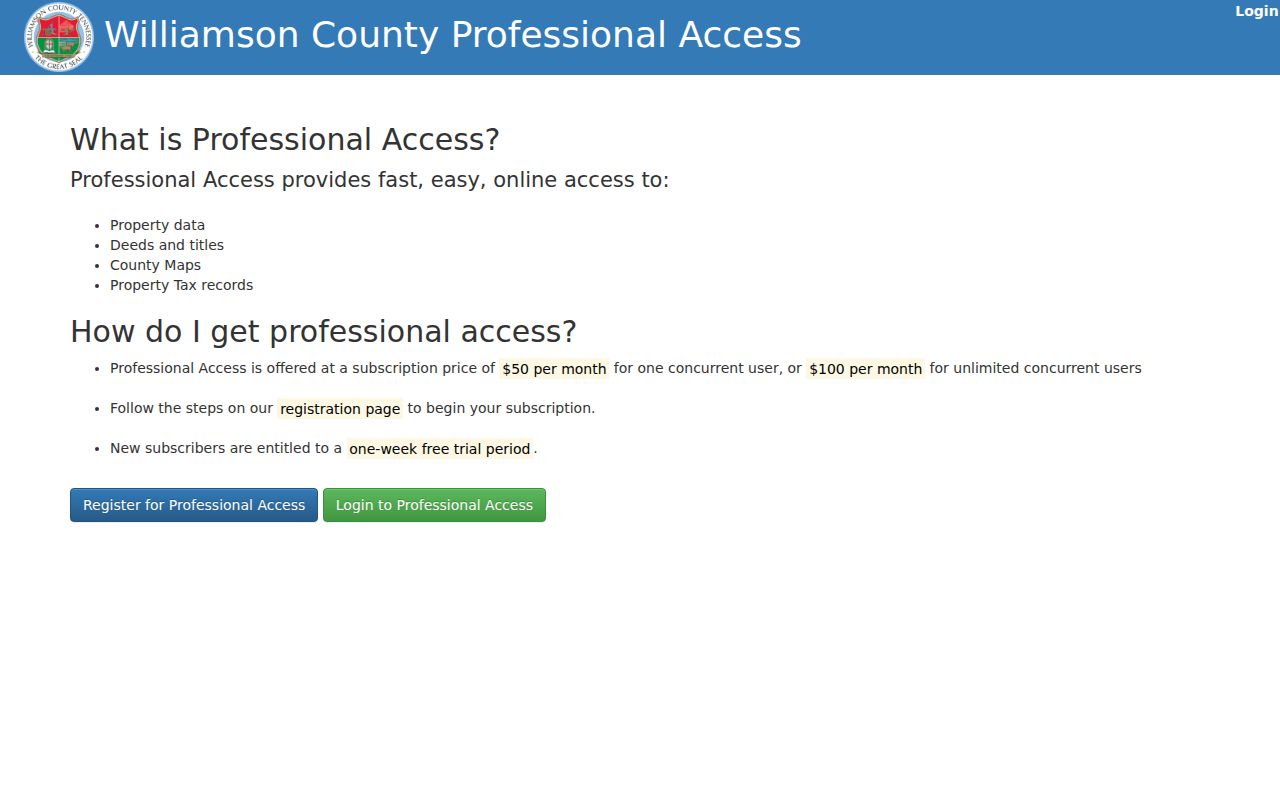
The Williamson County ProAccess service is the remote host for recorded-document access. Search both sides of a transfer. A grantor gives or conveys an interest; a grantee receives it. Names may also appear as borrowers, trustees, or lien parties. The public landing material does not state the exact first online year or promise free images, so avoid assuming that a blank web result means no instrument exists.
The official ProAccess screen confirms the county records host used in a Franklin people search.
If remote access stops at a login or reference, call the Register at 615-790-5706 or visit Suite 201. Supply spelling variants, an estimated date, instrument type, property address, and any known book, page, or document number. Older deeds may be indexed through the Archives and retrieved from a bound book, microfilm roll, or loose file.
Follow Franklin Court Name Records
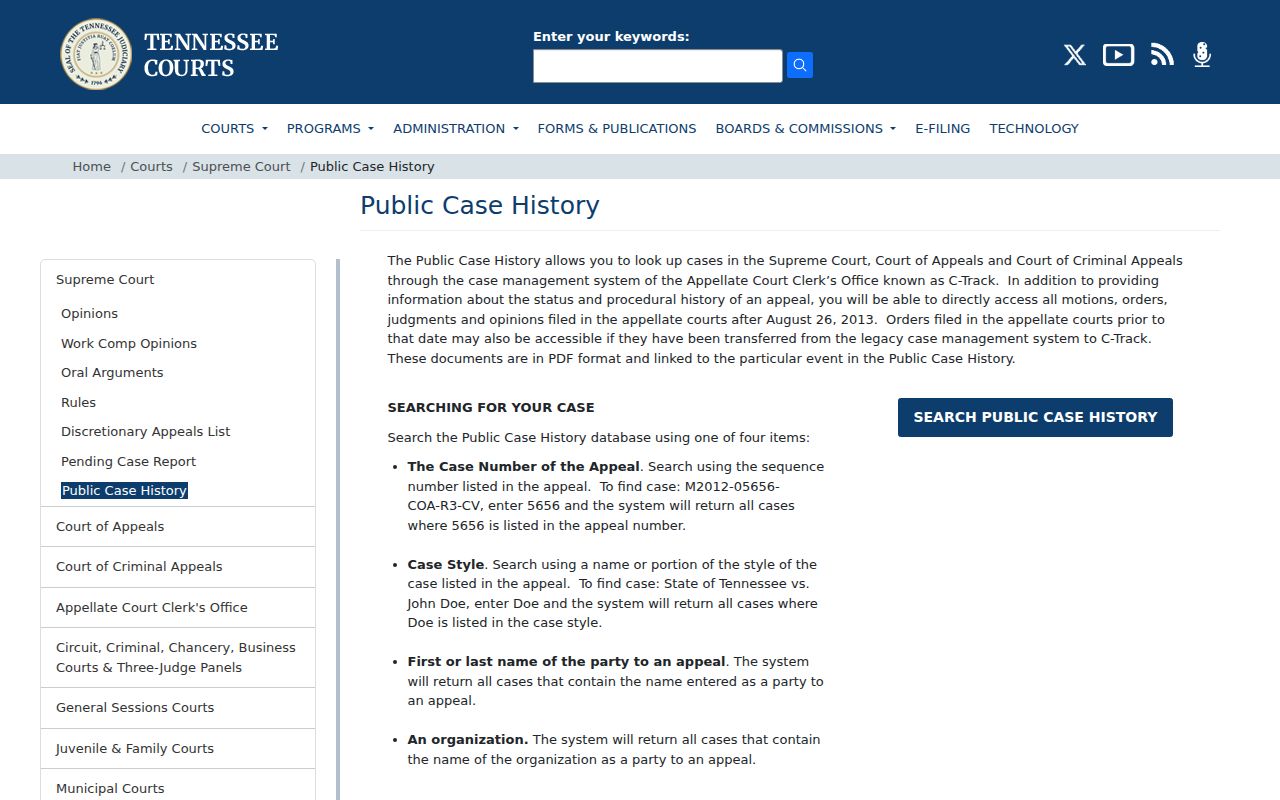
A Franklin name can appear in several courts, and jurisdiction comes first. Municipal Court handles city traffic, parking, fire, code, business, noise, and other ordinance matters. Williamson County General Sessions, Circuit, Chancery, and Probate keep their own current files. The Tennessee appellate Public Case History covers appeals, not every local trial case. The Middle District of Tennessee uses PACER for federal matters.
The state appellate page illustrates the difference between a statewide appeal lookup and the clerk-held Williamson County case file.
For the actual file, give the clerk the party name, approximate filing year, case type, and case number if known. Older court names may surface in the Archives index. Juvenile, adoption, sealed, and expunged matters are not ordinary public name records.
| Court | Covers | Name Search | Access |
|---|---|---|---|
| Williamson trial courts | Civil, criminal, equity, probate | Clerk or Archives index | Counter, terminal, or copy request |
| Franklin Municipal Court | City citations and ordinances | No official name index found | Phone, email, or counter |
| Tennessee appellate courts | Appealed cases | Public Case History | Free web search; clerk for record |
| Middle District of Tennessee | Federal cases | PACER | Account and current federal fees |
Trace Franklin Vital Records
The Tennessee Office of Vital Records issues statewide birth, death, marriage, and divorce certificates. County health departments can issue registered statewide birth and death certificates. The Williamson County Clerk handles local marriage licenses, while the Circuit Court holds divorce case files. A short state certificate and a full court file answer different questions.
Recent certified copies require an eligible relationship, accepted identification or a notarized application, and proof of authority when applicable. Tennessee charges $15 for a state certificate search, including a no-record result. Under T.C.A. § 68-3-205(e), births become public after 100 years, while death, marriage, and divorce or annulment records reach public archival access after 50 years. Williamson County Archives, TSLA, newspapers, churches, cemeteries, probate, and deeds supply the older trail.
Mail applicants use the form for the record type and include payment plus identity proof, unless the signature is notarized under the current instructions. A representative may also need documents showing the right to order. For a death record, access to the cause of death can be narrower than access to a certificate without cause. Check the current state entitlement rules before sending personal documents.
Franklin Address or City Limits
A postal line that says Franklin does not settle government jurisdiction. The City GIS service maps city limits, the urban growth boundary, wards, streets, addresses, parcels, and the county line. Williamson County assigns E-911 addresses in unincorporated areas. Check the boundary before seeking a city permit, code case, citation, or public hearing file. County deeds, assessments, and most trial-court records still apply across Williamson County.
Keep four land keys apart: the situs address marks the physical site, the mailing address receives tax mail, the parcel identifier links assessment and map data, and the legal description anchors deeds and plats. New streets may reach planning and GIS before every directory. An annexed site may have older county material and newer city permits under different numbers.
Franklin Municipal Name Trails
City records can identify people tied to permits, public hearings, municipal citations, boards, code cases, and service requests. The Franklin service portal can look up service requests by request number or by address and submitted-date range. Code enforcement offers case-number, address, and parcel-ID routes. A permit may name an owner, contractor, or applicant, but none of those roles alone proves who lives at the site.
Address mode accepts a street number, direction, street name, suffix, unit, city, state, ZIP code, and a submitted-date range. The street name is the key field, and the portal supports a partial street-name search. A request-number search is better when a confirmation is already in hand. New service requests can be filed anonymously, but the city warns that staff cannot contact an anonymous filer about status.
No public party-name index was found for Franklin Municipal Court. Contact its clerk at 900 Columbia Avenue, 615-794-5362, or franklincitycourt@franklintn.gov with a defendant name, citation number, violation, and approximate court date. For city administrative records, the City Recorder is the correct route. A narrow Tennessee Public Records Act request should name an existing record, department, subject, and date span.
Archives Expand Franklin People Search
The Williamson County Archives collections now describe more than 400,000 index entries. The all-groups name search can connect a person with court, marriage, will, deed, tax, obituary, road, burial, inquest, and license material. Results are finding aids. They may point to a bound book, microfilm, or loose document rather than an image that opens online.
The official Archives screen shows the local research service behind that cross-record search.
The Reading Room at 611 West Main Street is open weekdays, with seasonal Saturday hours. Staff also answer phone, email, and mail requests. Search all groups first, save the record reference, then ask staff which format holds the source. The growing live count explains why repeating an old search can reveal a newly indexed cross-reference.
Some groups work like early social directories. Road petitions can cluster neighbors and signers before modern addresses. Inquests may connect a decedent with witnesses, a place, officials, and circumstances. The Archives' “Ordinary Licenses” label covers tavern, ordinary, and tippling bonds and licenses, which can identify licensees and their sureties. Chattel-mortgage books from 1931 through 1965 can link people or firms with movable property and secured transactions.
Note: An Archives result locates evidence; inspect the cited source before deciding that two same-name entries identify one person.
Franklin Library Search Beyond Indexes
Williamson County Public Library Special Collections holds city directories, school yearbooks, Bible records, biographies, cemetery and burial material, local histories, military and marriage records, pension files, tax records, historic court sources, newspapers, wills, and other microfilm. The official page does not publish an exact year-by-year city-directory list, so ask staff about the needed edition instead of assuming a year is present.
The library image marks the local starting point for Franklin directory and genealogy work.
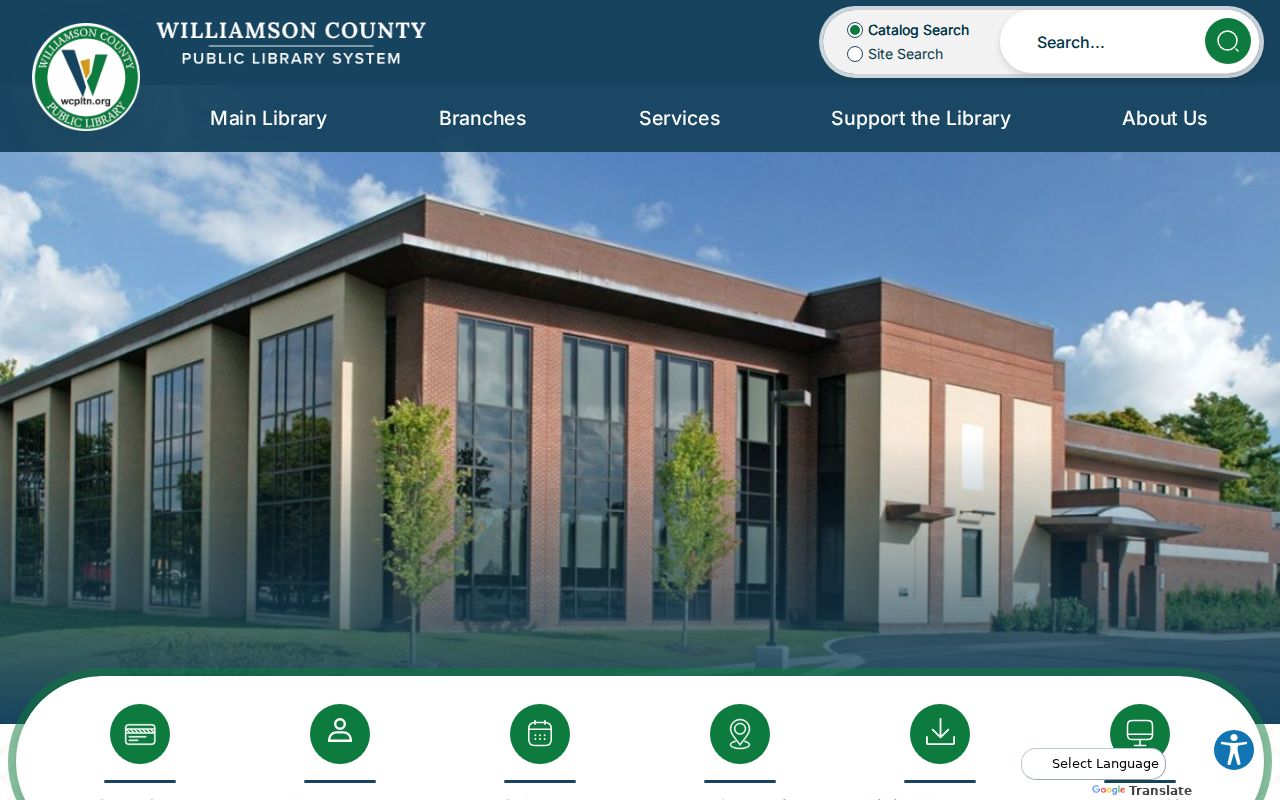
Special Collections material stays onsite. Visitors can use free Wi-Fi and may request a guest computer pass; the library also describes onsite access to genealogy databases from a personal laptop. A directory entry reflects one publication date and can miss people who moved, lived outside its coverage, or appeared under initials or a spouse's name.
Find Franklin Heirs Lawfully
A strong local heir trail begins with an obituary, death notice, or burial entry, then moves to a will or probate file. The estate record may name a personal representative, beneficiary, or heir as filed. Later deeds can show how an interest moved after death. Tax books, church and cemetery material, and the 1976 to 1982 historic-property survey can tie the family to a place.
Follow the chain in order: death source, probate reference, deed transfer, property file, then library and archive context. The survey's paper reports are in the Reading Room, but its photographs are available only on microfilm. That unusual split is a good reason to ask what format holds the item before choosing a mailed copy or an in-person visit.
Franklin Statewide Identity Searches
Tennessee systems can add a current official role to a Franklin name. The Secretary of State business search links entities with formation data, status, principal office information, and registered agents. A registered agent is not automatically an owner. Professional boards publish license status and, where allowed, public discipline. The Tennessee unclaimed-property search can reveal a reported name connection but does not prove a present address.
Custody searches also differ. Williamson County Sheriff records cover local jail and agency material. Tennessee FOIL covers current and former felony offenders in state custody or supervision. The TBI registry is a separate public-safety database with its own daily update and misuse warning. Record an as-of date and verify the correct agency before drawing a conclusion.
Official Records Versus Compiled Results
Commercial search tools can be fast, but they merge sources on their own schedules. A result may lag after a move or death, join two same-name people, or omit a protected record. An official source is narrower. It can prove that an office recorded a deed, filed a case, assessed a parcel, issued a license, or registered an entity on a stated date.
| Search source | Strength | Limit |
|---|---|---|
| Official index | Defined custodian and record role | May not include an image |
| Certified copy | Office-certified version | Eligibility or fees may apply |
| Archive finding aid | Reaches older local material | Requires source retrieval |
| Compiled search result | Fast lead across sources | Can be stale or mismatched |
Use a compiled result as a lead, then return to the office that created the record. A deed, parcel card, case docket, and directory entry each describe a different relationship.
When Franklin Records Stay Offline
First ask whether the record belongs to the City of Franklin, Williamson County, a court, a school system, or Tennessee. Then describe the existing item with names, record type, address or file number, department, and a short date range. State whether inspection or a copy is wanted. Tennessee citizens generally have the TPRA right to inspect open state and local records, but specific laws can close or redact a field.
Promptly available records should be supplied promptly. If that is not practical, the custodian generally has seven business days to produce them, deny the request in writing with a legal basis, or give a written estimate of more time. Inspection is ordinarily free, while copies, delivery, media, and labor may cost money under the office's policy. A custodian need not create a new list or conduct a custom investigation.
Ask for the exact exemption when access is denied, and request any reasonably separable public part. The Office of Open Records Counsel can explain the law, while judicial enforcement lies in the proper Tennessee chancery or circuit court. Recent law also gives a nonresident, effective July 1, 2026, a narrow right to that person's own law-enforcement report.